
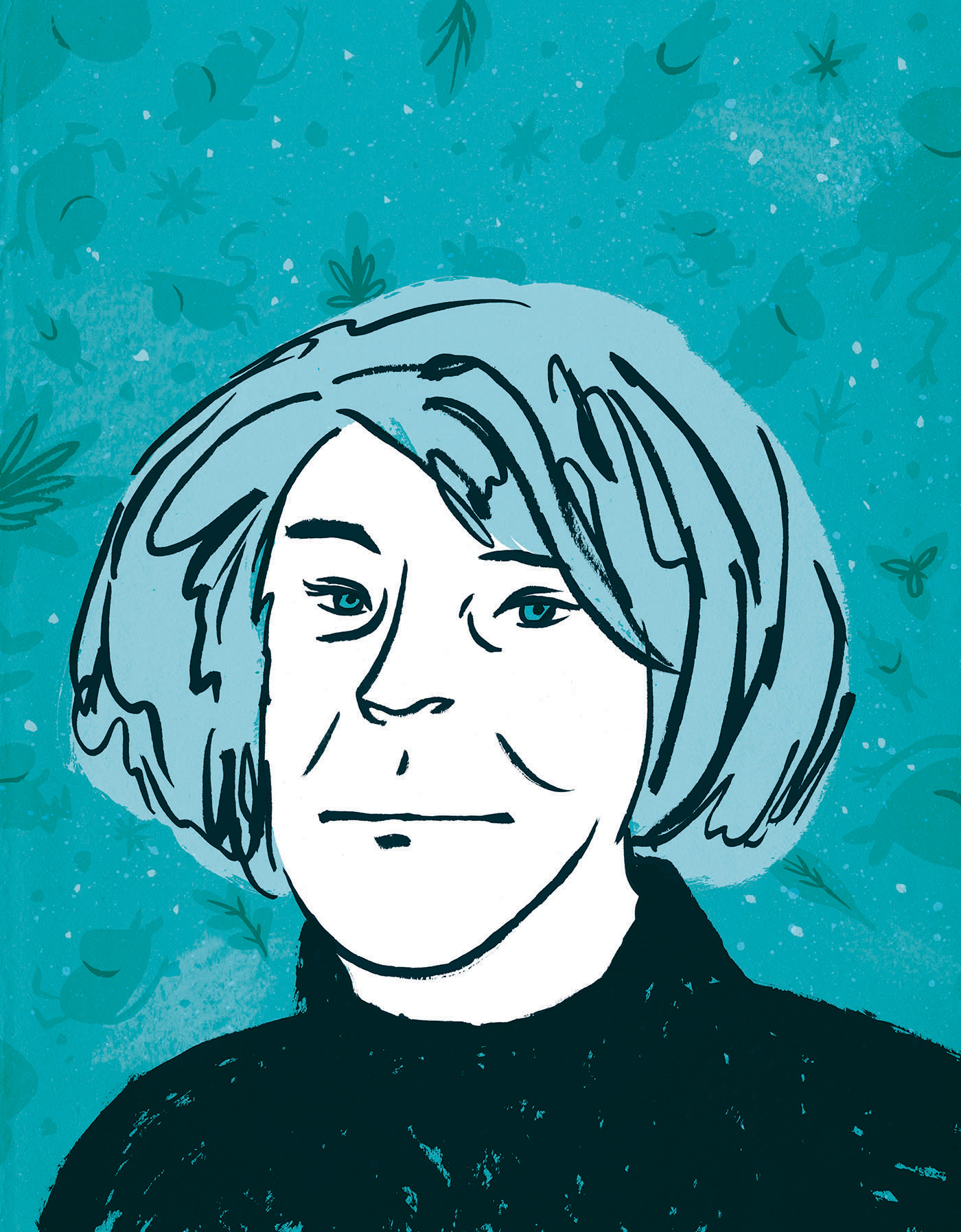
Candy Darling
Artwork By:
Blods
Words By:
Pavlos Paul Rousseas
Scroll Down

About
“It doesn’t matter who we were, only who we are.” said Candy Darling, Andy Warhol’s superstar, as she would come to be known.
Born on November 24 1944, and dead by 29, Candy Darling had a tragically short life in years. But what a tremendously important existence she led. During early years on Long Island, Candy Darling (nee James Slattery) dreamed of becoming a veritable star like the gorgeous women she worshipped on the silver screen; her favourite actresses (Kim Novak, Joan Bennett) were a constant source of inspiration not just superficially, for appearance’s sake, but rather holistically, as the patron saints of a lifestyle steeped in Hollywood glamour.
Coming of age in the 60’s was no easy feat for anyone on the LGBTQ spectrum. Gays, lesbians, transgendered individuals and queers faced extreme discrimination and systemic exclusion when it came to housing, employment, virtually all aspects of societal interaction. They were harassed and brutalised by the police, often cast as victims and then blamed for this victimhood. Many had to endure institutionalisation and electro-shock treatment. Career prospects were non-existent save for short-lived nightlife entertainment gigs or sex work. With limited means one’s living standards could be abysmally low, staying in rat-infested apartments with no water, lack of hygiene, dismal medical care.
It is in this milieu that Candy Darling chooses not to hide but to live unapologetically. The little boy who always felt like a girl and idolised the screen queens of the era will strive against all odds to live an authentic life, loudly and proudly. Obstacles turn into sure ways to rise up and resist a hostile society that fears the Other. In 1967 Candy Darling meets Andy Warhol who is besotted with her beauty and grace. Darling is cast in Warhol’s “Women in Revolt” and in “Flesh” and appears with Jane Fonda in “Klute” and Sofia Loren in “Lady Liberty”. She becomes a film star like the film stars she always adored, her saviors from the cruelty of provincial suburbia. She is photographed in the same magazines her idols appear. She is seen. She is visible. And for all those who feel marginalised, silenced, demonised, she leads by example.
Richard Avedon, Tennessee Williams, Lauren Hutton consider her a muse. Lou Reed writes “Walk on the Wild Side” inspired by her, and The Velvet Underground compose “Candy Says”; while The Rolling Stones mention her in “Citadel” and The Kinks record ”Lola”. Later on, Candy Darling appears on album covers by St. Vincent, Ahnoni and the Johnsons and The Smiths.
Candy Darling died of lymphoma at 29, a possible result of unregulated hormones that were later taken off the market because of carcinogenic side effects. Just shy of three decades and filled with hardship, Darling’s was a life nevertheless resplendent with pride and the certainty that it was a life that mattered.



.jpg)
