Kae Tempest
Artwork By:
Ragtag Ratbag
Words By:
Val DeBarra
Scroll Down

About
“When I was young, I sought help from my older self. I came into my head, I told me know yourself.” – Kae Tempest
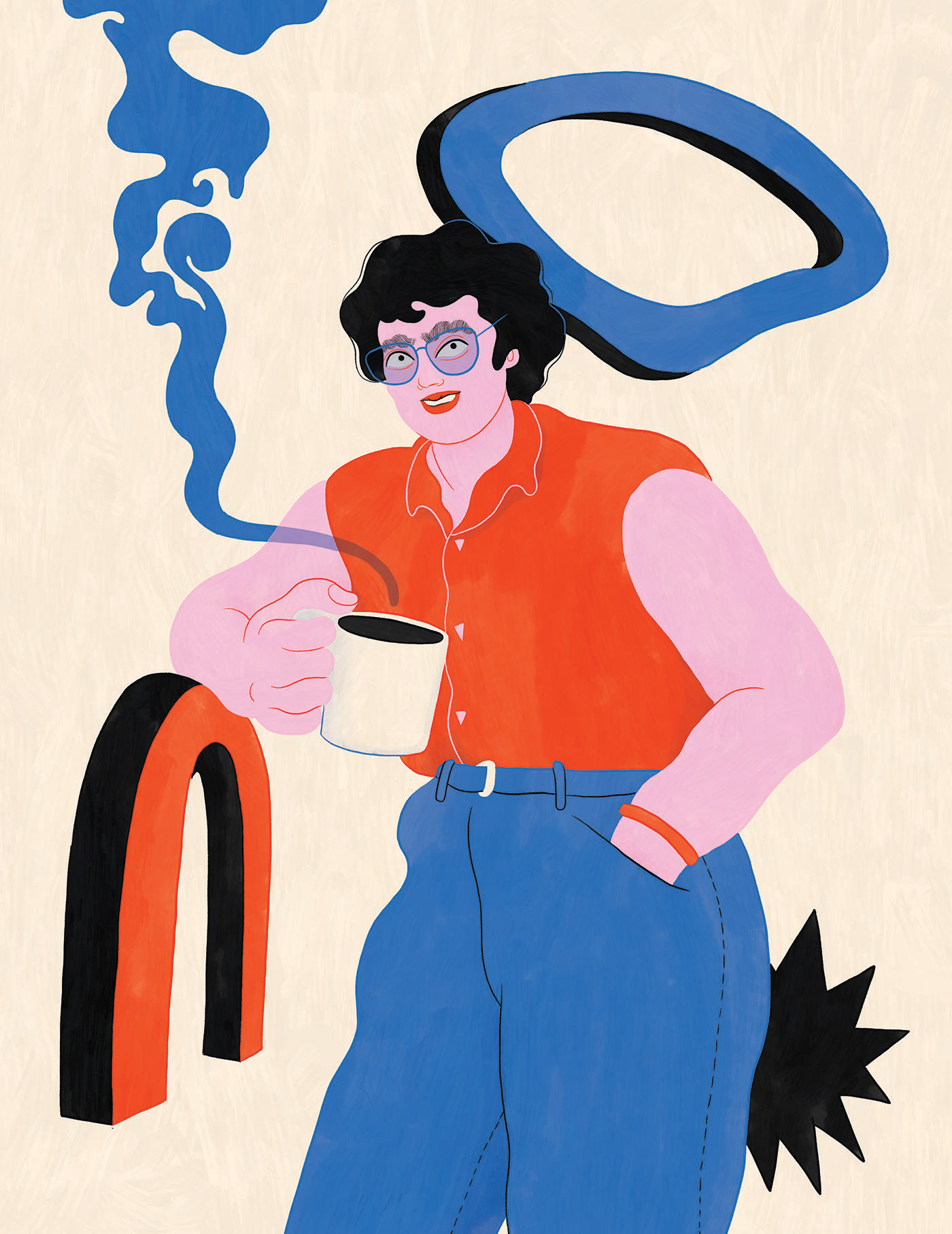
There’s a power in hearing someone tell the truth out loud, not softened or explained away. The kind that hits before you’ve had time to organise your thoughts. That’s where Kae Tempest works. Before the awards, before the books, Tempest was a teenager in South East London, figuring out how to hold a room. Not through volume but through control, the rhythm of a line, the timing of a pause, the confidence to let silence do some of the work. People listened because they felt it was real. No distance, no performance layer to hide behind.
When their book Brand New Ancients won the Ted Hughes Award in 2013, it didn’t feel like a quiet literary milestone. It felt like a shift in what was allowed. Poetry that moved like speech, like music, like everyday life not something separate from it. Tempest didn’t just step into that space he widened it. But the force behind the work has always come from somewhere more personal: the strain of living misaligned and the cost of keeping that hidden.
In 2020, Tempest came out as non-binary, later beginning his transition and speaking about the years he had spent carrying what he called a “boiling hot secret.” That kind of honesty doesn’t land in a vacuum. It lands in a country where trans lives are picked apart in headlines, where healthcare access is debated like a theoretical question, where visibility can feel as risky as it is necessary. Tempest’s presence sits right in the middle of that tension. Not as a spokesperson. Not as a simplified story. Just as a person refusing to make himself smaller to make others comfortable and that refusal runs through the work.
You can hear it clearly in the move towards Self Titled. Earlier albums wrestled with identity, with pressure, with trying to make sense of things mid-motion. This one feels different. More grounded. Less about searching, more about standing still and saying: this is it. On Know Yourself, Tempest brings their younger voice into the track folding past into present without trying to tidy it up. There’s no clean break, no ‘before and after’, just continuity. On I Stand On The Line, he holds multiple versions of himself at once, not resolving them, not choosing between them, just letting them exist side by side.
Self Titled feels like a point of arrival not in the sense of being finished, but in Tempest being more fully aligned with himself. You can hear the difference. There’s less urgency to explain and more certainty in just being. At a time when Trans+ people are often reduced to talking points, flattened into arguments, stripped of nuance, Tempest’s work insists on complexity. On the right to be contradictory, unfinished, fully human. That might be the real achievement. Not just visibility, or being first, or breaking through but holding that complexity in public, without diluting it. Making work that doesn’t translate itself down, that trusts people to meet it where it is. Tempest doesn’t simplify the story, he tells it truthfully. In doing that, he makes space for other people to recognise themselves not as headlines or categories but as whole, complicated lives.

.jpg)