.jpg)
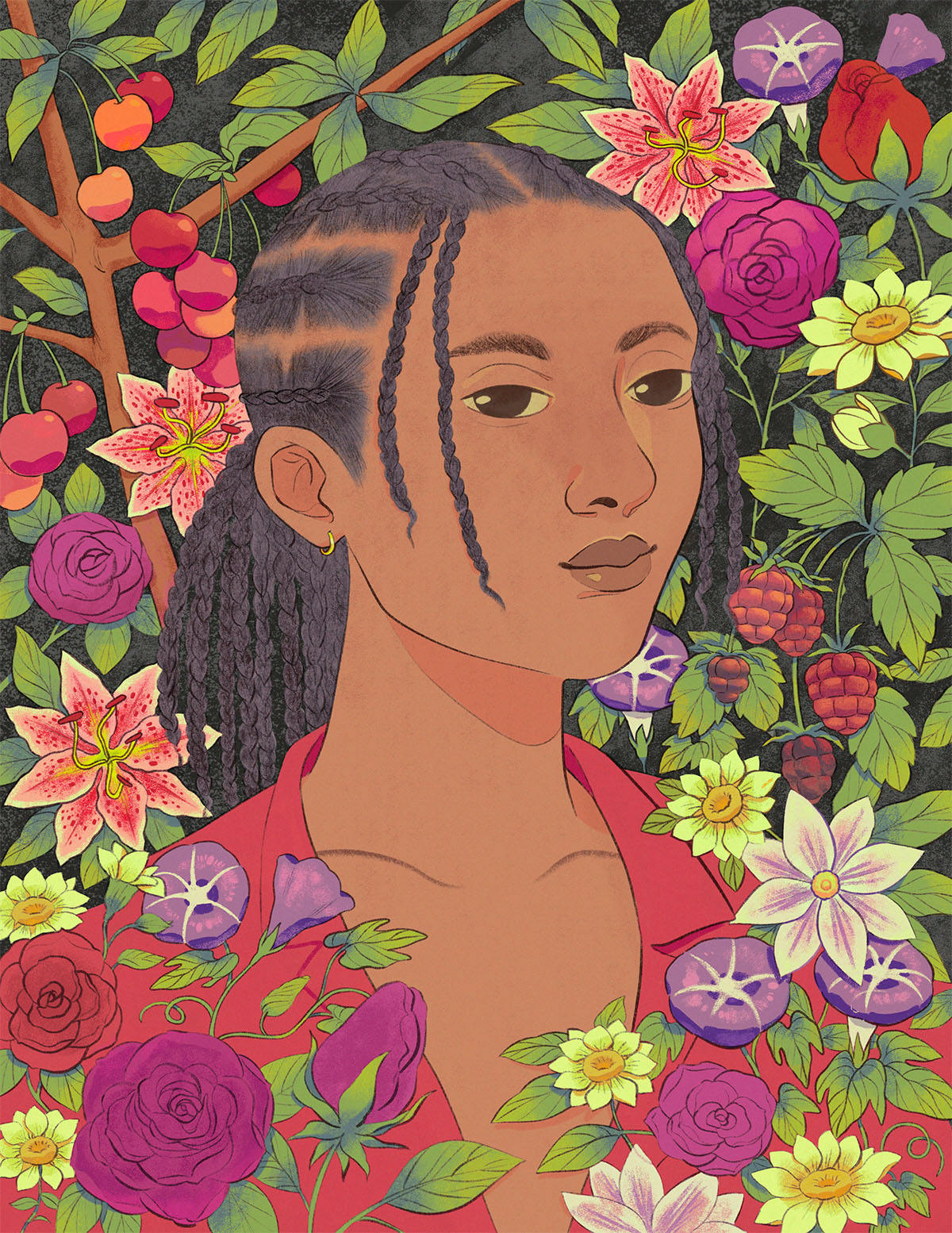
Lena Waithe
Artwork By:
Tom McQuaid
Words By:
Vic Brooks
Scroll Down

About
“The things that make us different – those are our superpowers”.
These were historic words at a historic occasion – the words of actor, producer and screenwriter Lena Waithe when she accepted her Emmy in 2017. She was the first ever Black woman to win the award for comedy writing, and used this extraordinary moment to tell LGBTQ+ communities that she sees each and every one of us. She reminded us that every day we put on our imaginary capes and conquer the world, “because the world would not be as beautiful as it is if we weren’t in it”.
Lena’s words were all the more powerful given that she was speaking them just a year after the deadliest shooting of LGBTQ+ people ever to take place. 49 people were killed and 53 were injured at Pulse nightclub in Orlando, Florida. Against this tragic background, Lena was reminding our communities at a crucial time of the strength and resource that lies within our differences.
Lena is someone who has experienced the stigma and harm that can be levelled at LGBTQ+ people, and especially LGBTQ+ women of colour. Lena’s Emmy was awarded for the Thanksgiving episode of the series Master of None – a show that refuses to shy away from difficult questions around race and popular culture. Thanksgiving, an episode about three generations of women who meet every year to celebrate Thanksgiving, was loosely based on Lena’s own coming out story to her Christian mother.
Born in May 1984, Lena grew up poor and in a single-parent family on Chicago’s South Side. Lena’s family are descendants of enslaved Barbadian people, and her grandfather emigrated from Christ Church Barbados to Boston in 1921. Lena’s family were Christians, albeit she describes them as “lazy” – they brought her up to share her Christian beliefs, but couldn’t quote the bible, and would rarely actually go to church except at Easter. When she came out to them, there wasn’t a religious element to their reluctance to accept her – rather it was about what the neighbours might think, or more accurately, what white people might think.
Growing up Black and LGBTQ+ Lena rarely, if ever, saw herself reflected on the screen – and if there was a character like her on screen, the narrative around them was often a negative one. It became her ambition to disrupt this narrative. She had strong support from the women in her family to pursue her acting and screenwriting ambitions, but as a Black LGBTQ+ woman trying to make it in a heavily white industry, it was always going to be tough. She did anything she could to get close to the movie industry – even working at a cinema and a Blockbuster store while studying at college.
After requesting a transfer to LA, Lena grafted as much as she could, making connections and becoming assistant producer on the sitcom Girlfriends, and then getting cast in Lisa Kudrow’s The Comeback. She was then cast in Aziz Ansari’s Netflix hit Master of None. This was a momentous moment in Lena’s career, since she was finally able to bring to the screen that fully rounded complex Black character that Lena had always wished, and fought hard, to see. Lena had begun that process of becoming a powerful disruptor in the white movie industry. Consequently, she has gone on to star in Steven Spielberg's Ready Player One. She also created the series The Chi, which tells human stories, not just gun violence headlines, from where Lena grew up – the South Side of Chicago.
Lena has said that there is a long way to go, and that there are many more storylines and characters she still wishes to see in the world – particularly for LGBTQ+ people who are underrepresented, such as asexual and intersex people. She is iconic in her disruptive force, but, as she made clear in her historic speech back in 2017, she does not lead the charge alone. Indeed, she cannot. None of us can. Yes, as Lena said – we need our capes, but we also need each other, and we need our differences because they are what make the LGBTQ+ community a resilient and creative force of nature.



.jpg)
