
Leslie Cheung
Artwork By:
Justin Yoon
Words By:
Elizabeth Lee
Scroll Down

About
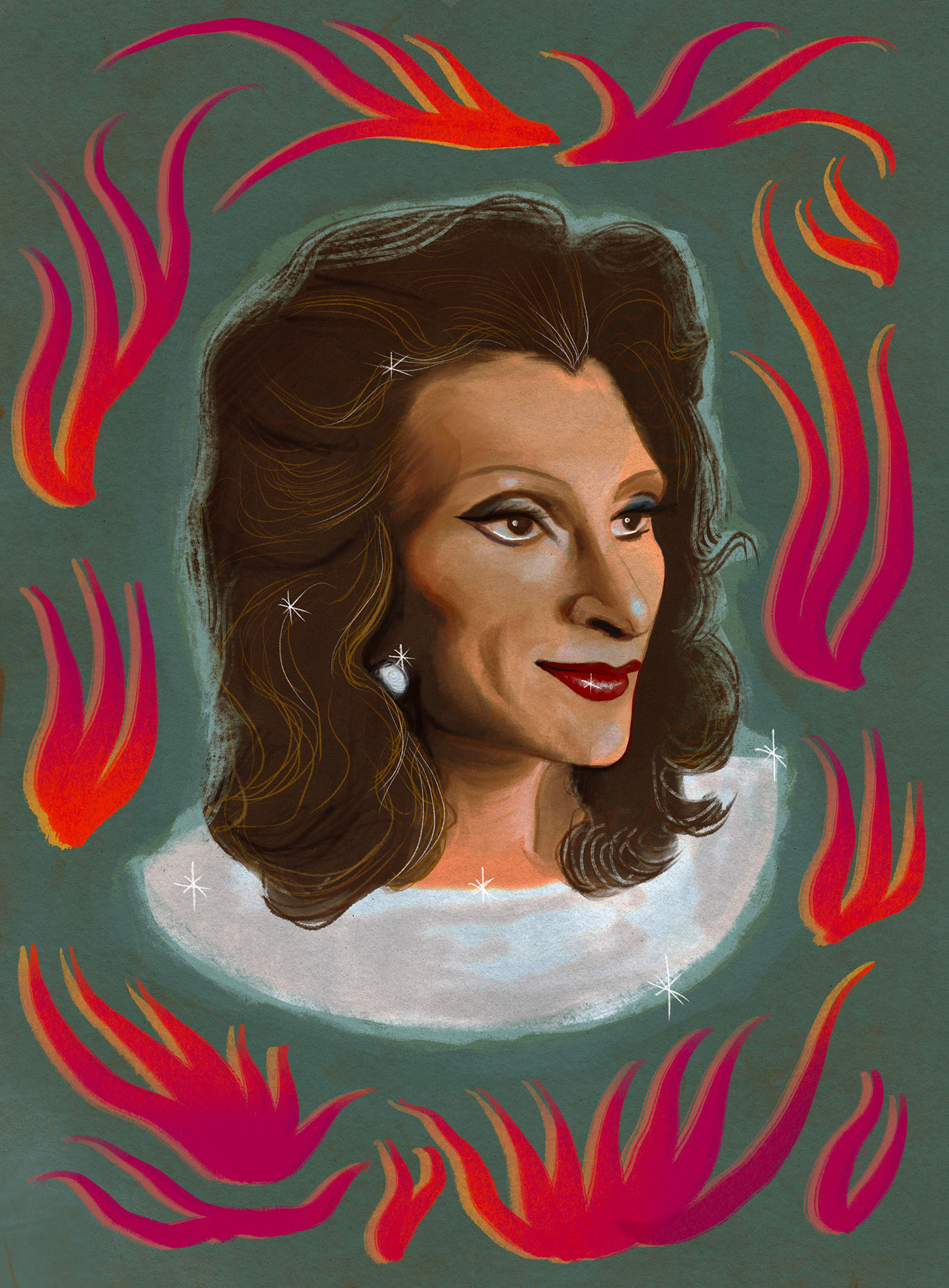
1997, Hong Kong. It’s one of the biggest Cantopop concerts of the year, and the packed stadium screams as Leslie Cheung appears on stage in a glittering black suit and a pair of sparkling red heels. Singing a sultry ballad, he tangoes intimately with a male dancer. Later in the same concert, he dedicates a classic love song to his same-sex partner – an iconic moment that marks him as one of the first openly queer celebrities in East Asia.
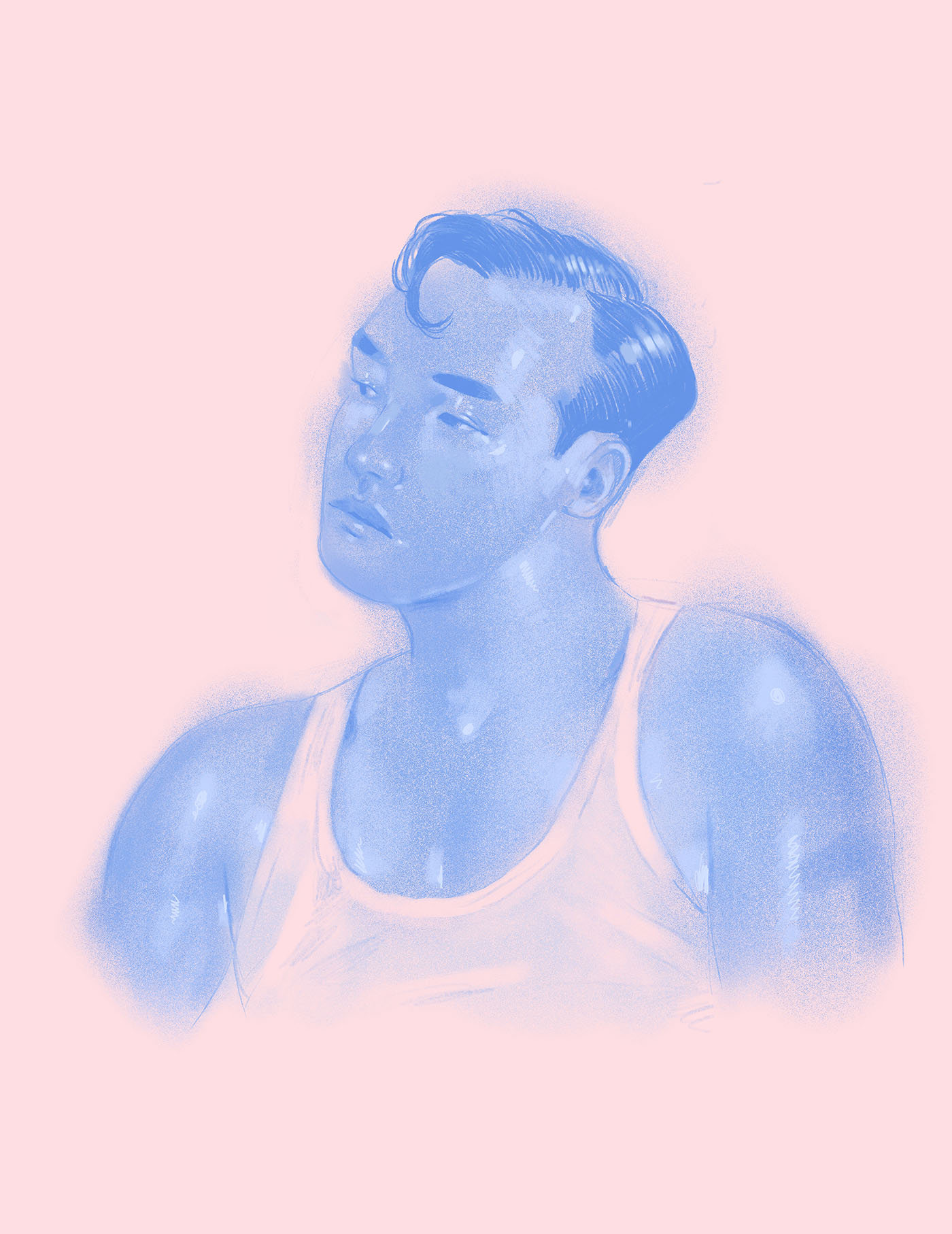
A superstar of Cantopop’s golden era, Leslie challenged gender conventions with his outspoken bisexuality and androgynous style, which ranged from feminine elegance to James Dean-esque bad boy. He even chose the name “Leslie” because he found it “sexy” and gender-neutral. Society at the time was conservative: even after Hong Kong decriminalised male homosexuality in 1991, queer people were portrayed negatively in mainstream media. Nevertheless, Leslie defied stereotypes and traditional gender expression: “the highest achievement for a performer is to be both genders at the same time,” he said. “Art itself is genderless.”
Internationally, Leslie is perhaps better known for his work on the silver screen. In Farewell My Concubine (1993), he starred as a gay Peking opera singer trained to play female roles, who is in unrequited love with his male costar. A tragedy set during a period of political turmoil, the film is subversive in its portrayal of gender and homosexuality, especially in the conservative Chinese context of its release. In 1997 – the same year he came out during his concert – Leslie starred alongside Tony Leung in auteur Wong Kar Wai’s film Happy Together, playing a gay couple in a tumultuous relationship. Queer characters in Chinese-language cinema in the ’90s – when they appeared at all – were often exaggerated and comical caricatures. By contrast, Leslie portrayed his characters with sensitivity and nuance, giving them the dignity, depth and grace that they deserved.
Today, Leslie is remembered as the star of a generation, a trailblazer who boldly smashed through the boundaries of gender and sexuality. Every year, on the anniversary of his untimely death in 2003, fans gather outside the hotel where he died, bearing flowers, photos and memorabilia. Alongside long-time supporters from the ’80s are young fans – a new generation who discovered Leslie’s work after his death. Leslie’s legacy shines on in the minds of those he inspires, and in the hearts of those who love him for being unapologetically himself.