.jpg)
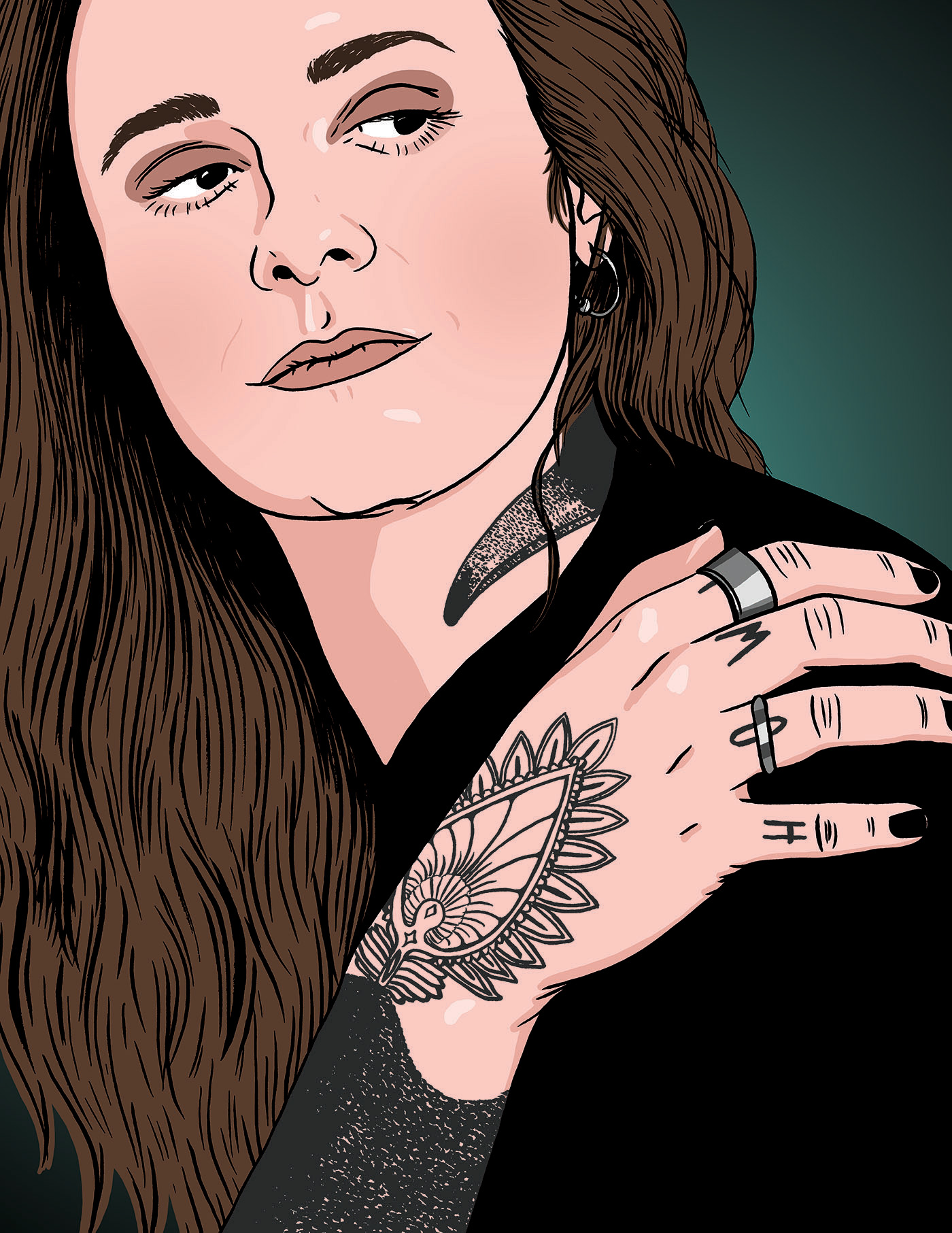
Marsha P. Johnson
Artwork By:
Tevy Khou
Words By:
Zee Monteiro
Scroll Down

About
Marsha P. Johnson was a central figure in queer and trans history. A Black trans activist, performer and community caretaker whose life reshaped what resistance could look like. She was born in 1945 in Elizabeth, New Jersey, and moved to New York City as a teenager with a desire to live her life openly. She settled in Greenwich Village and built a life rooted in community and mutual care with her chosen family.
Marsha lived at the margins of society and, like many other trans women, survived through sex work and performance whilst remaining deeply embedded in the queer communities around her. When asked about the ‘P’ in her name, she explained that it stood for ‘Pay It No Mind’ and often used her middle name and life motto as a response to the questions surrounding her gender as a way to refuse the categorisation into rigid gender constructs.
In 1969, Johnson’s life shifted when she found herself working with the resistance at The Stonewall Inn, a gay bar at the center of the 1969 uprising. In the early morning hours, police raided the bar and began arresting the patrons, most of whom were gay men. Feeling angered by the relentlessness of police brutality, Marsha P. , together with Sylvia Rivera and others, led a series of protests.
The Stonewall uprising became a turning point, igniting what would grow into the gay rights movement. Unfortunately, due to the lack of inclusion within the queer community, transphobia and racism plagued the movement. As a response, Sylvia and Marsha P. spoke openly about the exclusion they faced and, in the same year, 1970, they founded S.T.A.R. (Street Transvestite Action Revolutionaries), an organisation dedicated to housing and sheltering young trans individuals who had been shunned by their families.
Marsha endured profound violence and mental health struggles, yet she continued to show up for her people and individuals who had nowhere else to turn. She died on July 6, 1992, at the age of 46, after her body was found in the Hudson River. At her funeral, hundreds of people showed up at the church to pay their respects to Marsha and her life. At the time, Johnson’s death was ruled as suicide, and it was only in 2012 that the New York Police Department reopened the case into her death – investigating it as a possible homicide.
In recent years, Marsha’s legacy has received a long-overdue public recognition. In 2019, New York City announced that Johnson would be honoured with a monument commissioned through the She Built NYC campaign – the first monument in the city dedicated to transgender women. In 2020, New York State also named a waterfront park in Brooklyn in Marsha P. Johnson’s honour, ensuring her presence remains part of the city she helped to transform.


.jpg)


