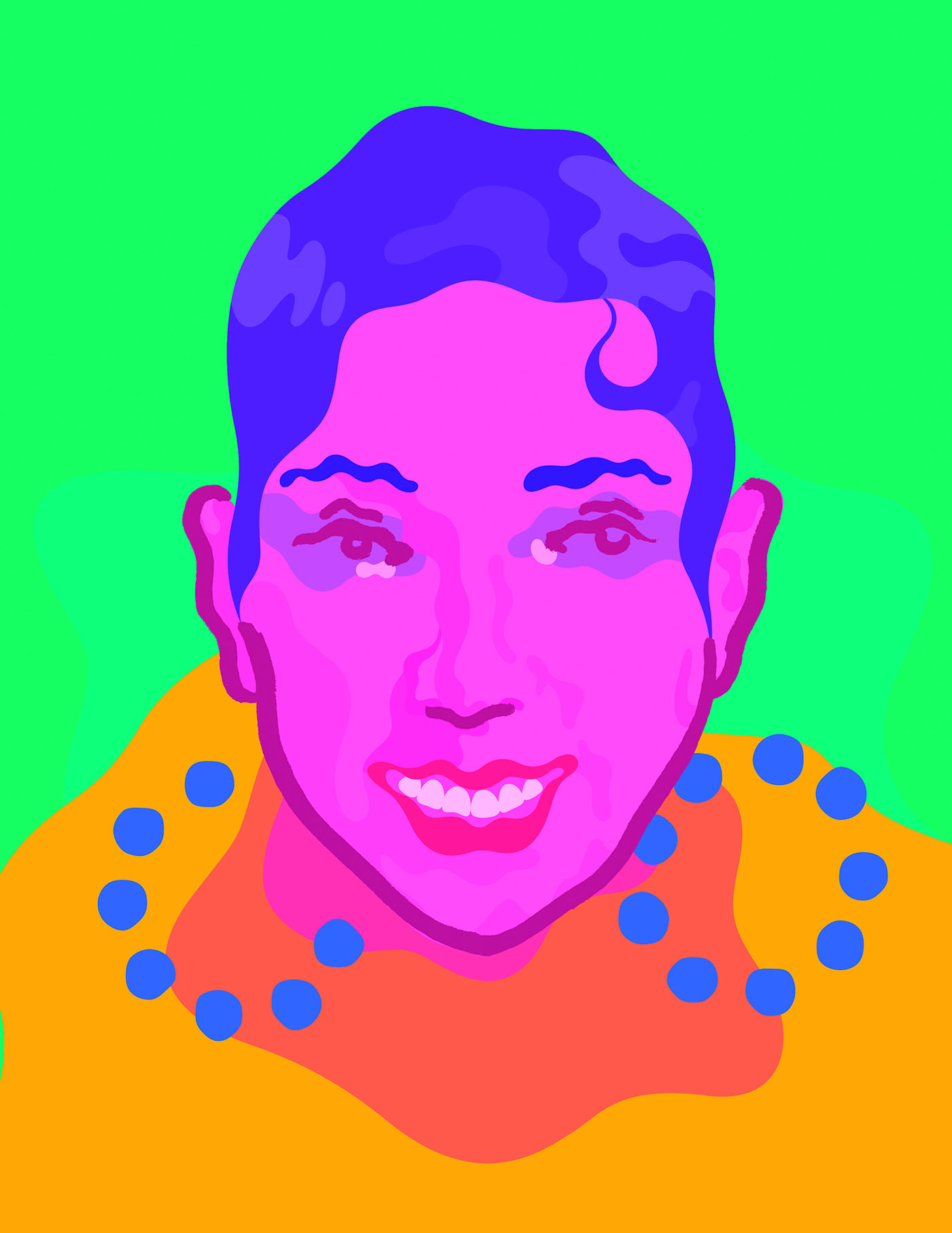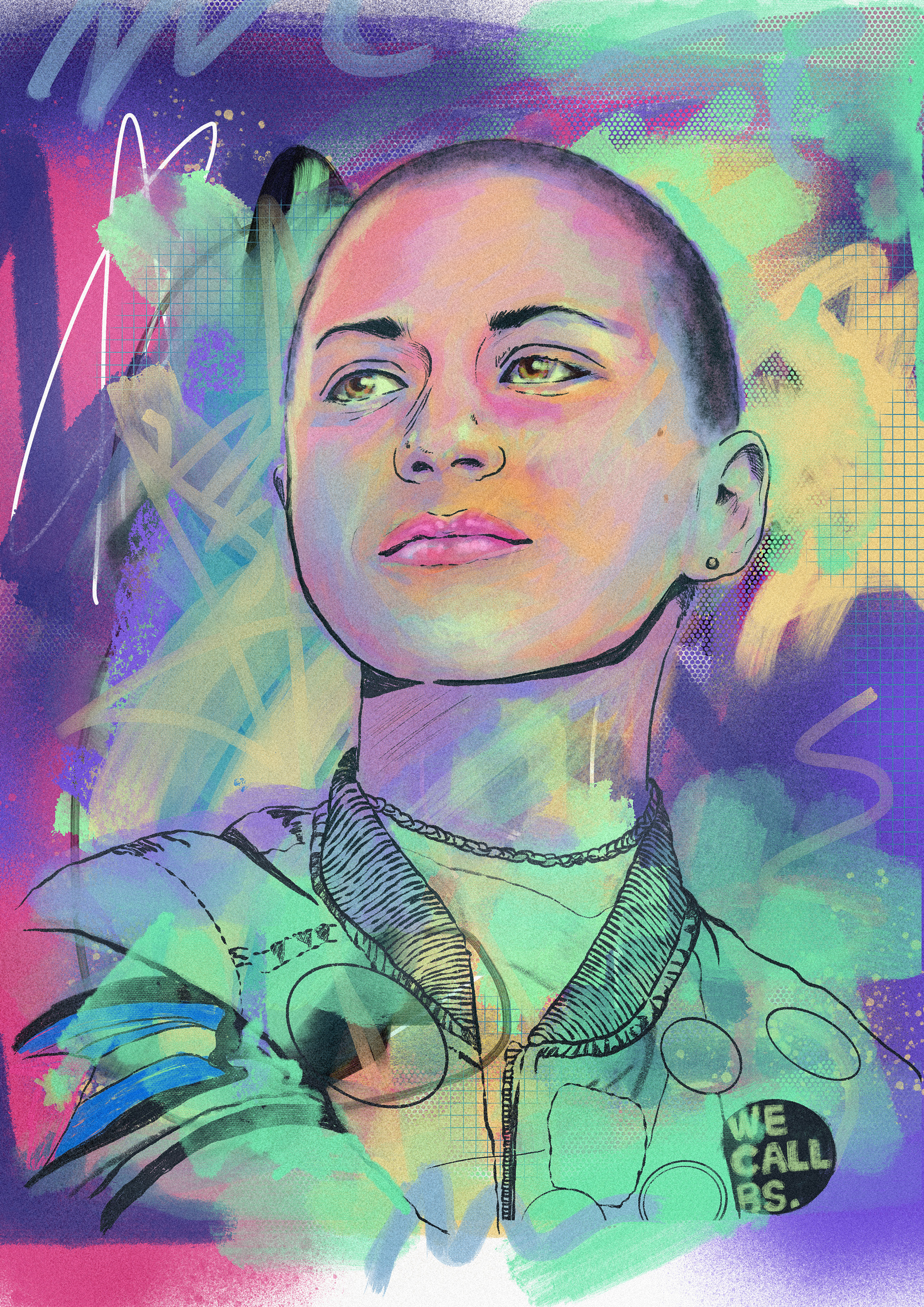
X González
Artwork By:
Toria Jaymes
Words By:
Judith Ujaque
Scroll Down

About
Six minutes and twenty seconds.
That was how long the shooting lasted at Marjory Stoneman Douglas High School in Parkland, Florida. Six minutes and twenty seconds of terror that reshaped an entire generation. For X González (they/them), it marked the moment when grief turned into urgency, and silence became impossible.
Born in 1999, X was a student at Parkland when the mass shooting took the lives of 17 people. In the aftermath, they emerged as one of the most visible voices demanding change. As a co-founder of March for Our Lives, X helped transform personal trauma into a global movement calling for stricter gun control laws in the United States. Their activism was driven not by spectacle, but by insistence: that young people deserved to live without fear.
One of the most powerful moments of that movement came during the March for Our Lives rally in Washington D.C., when X stood on stage and remained silent for several minutes. The silence lasted exactly as long as the shooting itself. It was an act of remembrance and protest, forcing the world to sit with the reality of gun violence rather than look away.
Beyond their political impact, X González’s visibility as a queer person has been deeply significant. X identifies as bisexual and non-binary, and uses they/them pronouns. Choosing the name “X” was a conscious decision: a gender-neutral symbol that resists labels and binaries, and a way to reclaim their identity beyond public expectations. The name also reflects a desire for openness, an identity not fixed, but self-defined.
X has spoken openly about the pressure of growing up under intense media scrutiny, and about the toll activism can take on mental health. In later years, they chose to step back from constant public exposure, challenging the idea that marginalised people must endlessly perform resilience. This decision, too, became a political act: prioritising care over burnout, and redefining what sustained activism can look like.
X González represents a generation of activists shaped by interconnection, where gun violence, queer identity, mental health and social justice are inseparable. Their voice helped open space for LGBTQ+ youth within political movements that have often excluded them.
X’s legacy is not only about protest, but about presence. About existing loudly, queerly, and truthfully in a world that often demands silence. Their story reminds us that activism does not require perfection, only the courage to speak, and sometimes, the courage to step back.

.jpg)


.jpg)