.jpg)

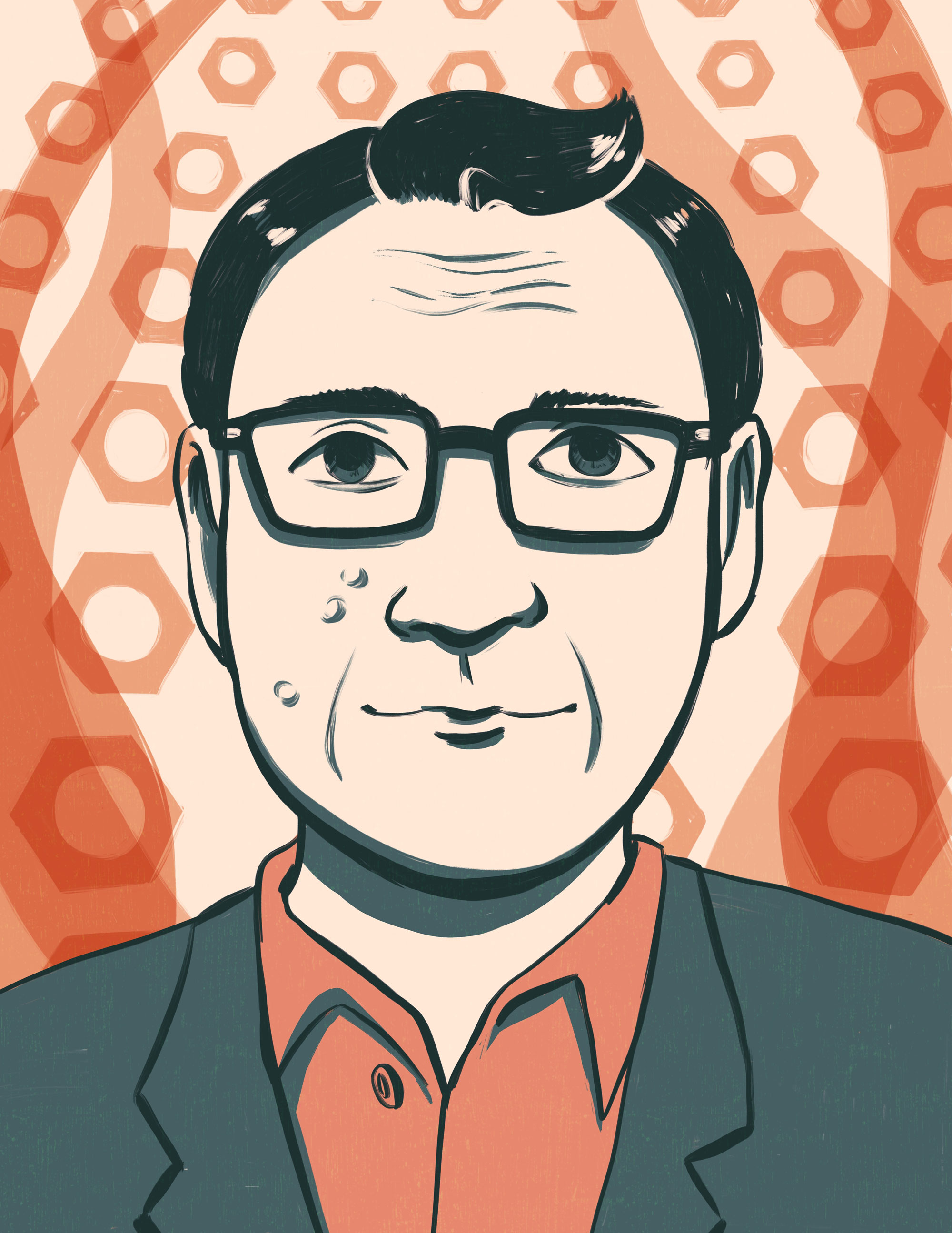
Bayard Rustin
Artwork By:
Leah Labrador
Words By:
Glen Edward, M. Ed.
Scroll Down

About
Behind one of the most iconic moments in the history of the Civil Rights Movement stood a man whose name many people still do not recognise. When hundreds of thousands gathered in Washington, D.C., in 1963 to demand jobs and freedom, it was the brilliance of Bayard Rustin that helped make the March on Washington possible. Rustin was a lifelong activist, organiser, and thinker who believed deeply in the power of nonviolent protest.
Born in Pennsylvania in 1912 and raised by his grandparents, he grew up surrounded by ideas about justice and equality. His grandmother, Julia Davis Rustin, a member of the Quaker faith, instilled in him a belief in peaceful resistance that would shape his political philosophy for the rest of his life. Long before the Civil Rights Movement captured national attention, Rustin was already organising protests against racial segregation and advocating for social change. These early experiences helped shape the strategic mind that would later play a critical role in the Civil Rights Movement.
Yet Rustin’s role in the movement was complicated by the realities of the time. As a Black gay man organizing in a society shaped by racism and homophobia, he occupied a difficult position. His brilliance as a strategist was widely respected, but many political and movement leaders feared that his sexuality could be used to discredit the fight for Black civil rights. Because of this, Rustin was often pushed into the background even as his ideas helped guide the movement forward. Even so, Rustin’s influence was undeniable. Working closely with Dr. Martin Luther King Jr., he helped shape the movement’s commitment to nonviolence and strategic protest. His greatest achievement came in 1963 when he organized the March on Washington for Jobs and Freedom. Coordinating transportation, security, media coverage, and logistics for more than 250,000 participants was an enormous undertaking, but Rustin managed it with remarkable precision. The march would become one of the defining moments of the Civil Rights era and the stage for King’s famous “I have a Dream” speech.
For many years, Rustin’s contributions were overlooked, in part because of the discrimination he faced as both a gay man and a Black man. In recent years, Rustin’s story has gained renewed attention as conversations about race, identity, and LGBTQIA+ history continue to shape how we understand justice. Today, however, his legacy is receiving the flowers it deserves. Rustin reminds us that social movements are not built by a single voice, but by the dedication of countless individuals who work tirelessly behind the scenes.
Remembering Rustin today is important not only because of what he achieved, but because of what his story represents. His life shows that leadership does not always stand at the podium. Sometimes it is the strategist behind the scenes whose vision helps move history forward.
Category
Politics & Activism

.jpg)

.jpg)
