.jpg)

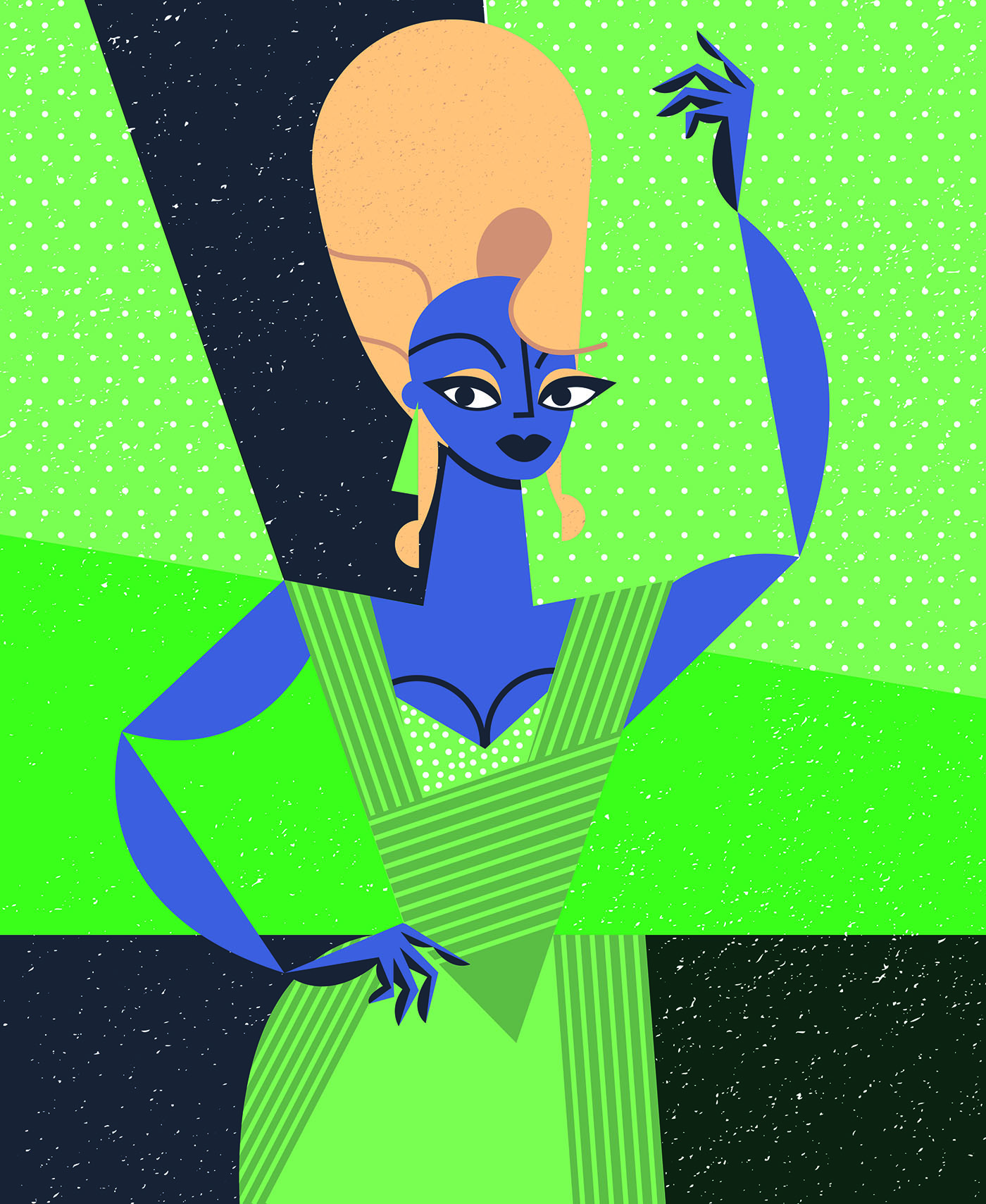
Crystal LaBeija
Artwork By:
Maz Hussain
Words By:
Amelhyne O'Regan–Farineau
Scroll Down

About
“I have a right to show my colour, darling. “I am beautiful and I know I’m beautiful.” – Crystal LaBeija (The Queen, 1968)
Born in the 1930s, Crystal LaBeija was an American trans woman and drag queen. Co-founder of the historic House of LaBeija, Crystal was a mother figure of the homeless LGBTQ+ community in New York City. In 1979, Crystal LaBeija was the first drag queen RuPaul (American drag queen and fabulous host of “RuPaul's Drag Race”) ever witnessed performing on stage. It goes without saying that LaBeija changed history in more ways than one.
In 1967, Crystal LaBeija was crowned ‘Miss Manhattan’ and subsequently, participated in the Miss All-America Camp Beauty Pageant as filmed in the documentary “The Queen” (1968). Towards the end of the documentary, Crystal accused pageant organizer Flawless Sabrina of rigging the judging in favour of the white queens. It was during this time that New York City’s drag culture was divided by race, and people of colour were generally expected to whiten their faces for competitions. Crystal stormed out of the competition, promising to never participate in another pageant.
Crystal LaBeija and Lottie LaBeija founded The House of LaBeija in 1968, fuelled by their desire to create a safe space for queer people of colour within New York.
The House of LaBeija is credited to have started the house system within ball culture. In 1972, they threw their first event, titled "Crystal & Lottie LaBeija presents the first annual House of LaBeija Ball at Up the Downstairs Case on West 115th Street & 5th Avenue in Harlem, NY." Despite the long title, it was a keystone event that has truly made its mark in drag queen herstory!
It was the first time the term "house" was used in a queer setting. A “house” meaning a haven for queer individuals seeking family, structured similar to a traditional home, with a mother (the head of the household) and children. Coined by LaBeija in order to market the event, it resulted in huge success. The House of LaBeija went on to host numerous benefits and raise awareness during the 1980’s HIV/AIDS epidemic.
House of Xtravaganza and House of Ninja, born from the underground ballroom scene in New York City, are said to have been inspired by The House of LaBeija, having gone on to establish their own house system. These houses are still active today.
Crystal continued to work as a performer and activist throughout the 70’s and 80’s. Drag would not be what it is today without the craft, passion and sheer dedication of Crystal LaBeija. Her work is forever cemented in queer culture, through the celebration of ballroom and fearless expression of self love.
Crystal LaBeija’s date and cause of death is, sadly, unknown. It is believed that she passed away in the 1990s due to organ failure. Regardless of how she passed, her legacy and “epitome of glamour and poise” remains firmly engraved in queer herstory.
Category
Entertainment


.jpg)
