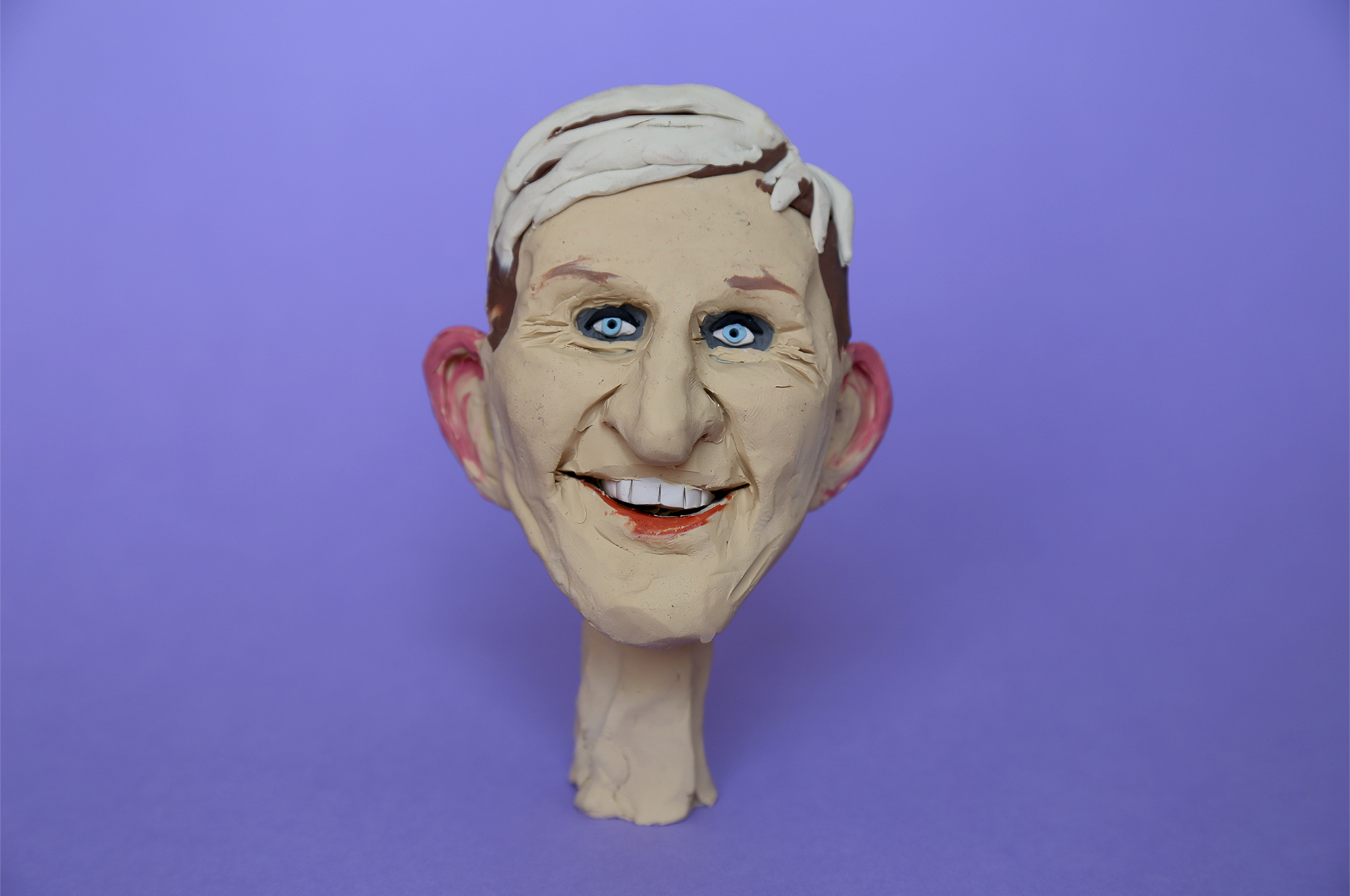
Ellen DeGeneres
Artwork By:
Wilfrid Wood
Words By:
Olivia Warden
Scroll Down

About
‘Yep, I'm gay’ – Three tiny words that wielded so much power when plastered in red across the front of Time Magazine in 1997. Crouching behind them, a nonchalantly posed DeGeneres; a warm, friendly grin beaming out from below her blonde curtains. Three tiny words that would change the trajectory of the young comedian’s life and career.
Hailing from Louisiana – one of the Southern US states – Ellen began in the 1980s what would quickly snowball into a hugely successful entertainment career, gaining a fast-growing level of attention in the US following a first appearance on The Tonight Show Starring Johnny Carson. After proving popular, she went on to star in two TV sitcoms – the imaginatively self-titled Ellen and The Ellen Show.
It was after gaining notoriety through her role in the first of these, Ellen, and quickly becoming a household name that speculation started to fly around about her sexuality – which until this point had been a somewhat ambiguous subject.
At a time when coming out as LGBTQ+ was far less common, and the result of doing so was even more uncertain in terms of how it might affect your life and career, Ellen took an incredibly brave step during probably the most pivotal time in her life to live truthfully and unapologetically, all whilst fully exposed to the scrutiny of the public eye.
Using her sitcom character Ellen Morgan as a vehicle, alongside her real-life Time magazine interview, DeGeneres came out both on television and in her personal life in April 1997. It was a moment that marked a true watershed for LGBTQ+ representation, making her one of the first openly gay lead characters on a US network television show. A wildly controversial move at the time, it brought intense scrutiny and led several advertisers to withdraw their support from the show.
Despite plenty of outcry, there was also a huge amount of support for DeGeneres, and her success continued to develop into a massively successful career in TV, stand-up and acting. Among countless other accolades and achievements, in more recent years she is perhaps most well-known as the distinctively endearing voice of Dory, the forgetful fish in Pixar films Finding Nemo and its sequel Finding Dory – both of which were immensely successful.
Even with the polarised public perception of DeGeneres post-coming out, she continued to edge further into the limelight through the position of talk show host on her wildly popular The Ellen DeGeneres Show. Her (again) self-titled chat show amassed well over 3,000 episodes and ran for nearly twenty years until it was eventually brought to an end in 2022 after controversial claims came to light of bullying and a toxic atmosphere towards staff on the show. A shock to so many people who had long admired DeGeneres for her reputation of kindness and laughter.
Despite the the widely reported allegations of a toxic workplace, including claims about her treatment of staff from her position of power, it can't be denied that Ellen made substantial breakthroughs and paved the way for many in the LGBTQ+ community by using her newfound platform to be unapologetically herself at a time when it could so easily have meant sacrificing any chance of a career. So while we definitely cannot condone or celebrate many of her reported actions, there are certainly key elements of her story that are undoubtedly still worth celebrating for her bravery and the impact this has gone on to have for the global queer community.

.jpg)