Sylvester
Artwork By:
Jon McCormack
Words By:
Anuli Changa
Scroll Down

About
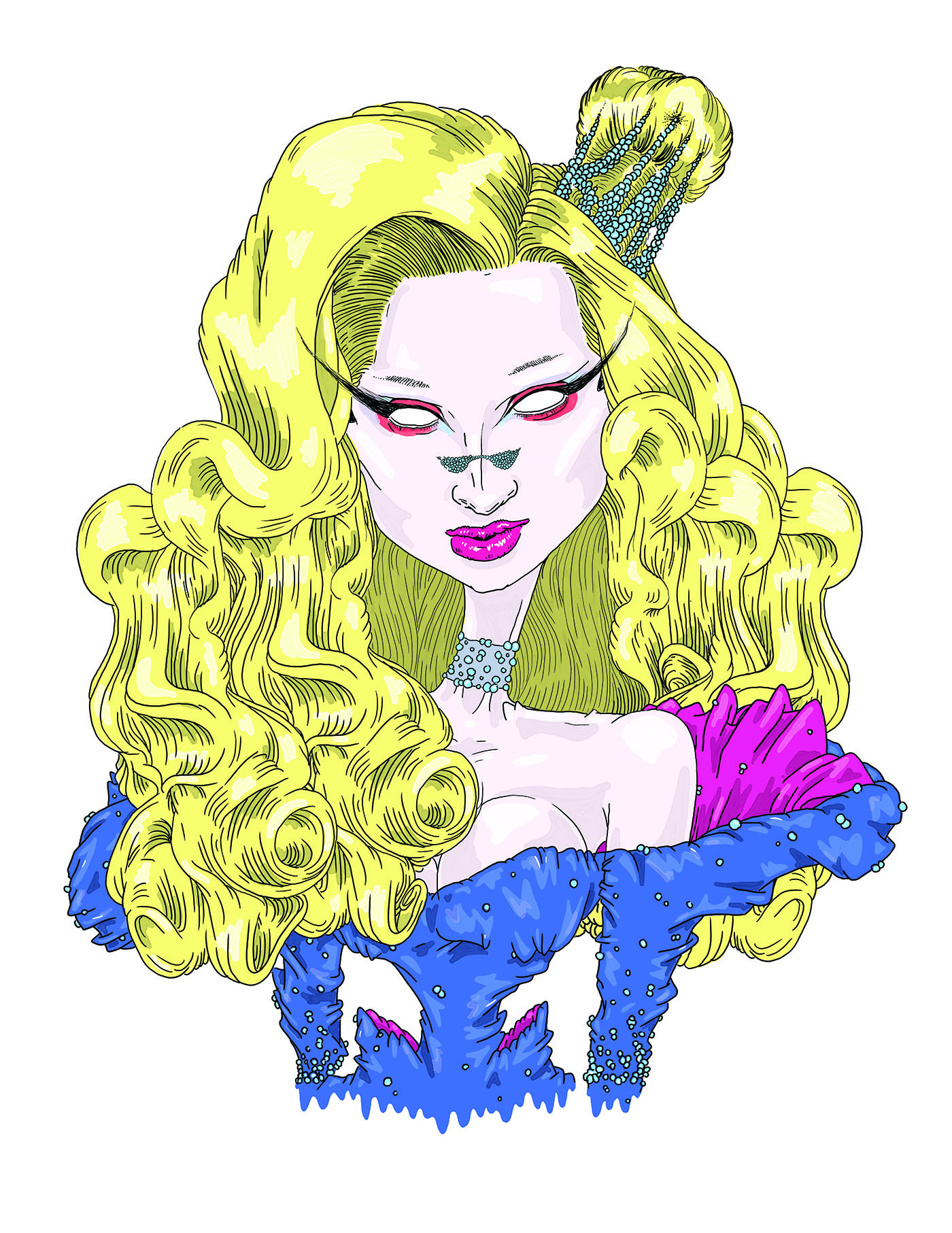
Sylvester (Sylvester James, Jr., 1947-1988) was a force of courage and fabulousness that is hard to encompass in words or any medium. He bursts free from any bounds and subsumes any title; he will tell you himself: “I’m not a drag queen — I’m Sylvester!”
Sylvester should be a household name, for his activism, his music, his beauty and his quotability: “Sometimes folks make us feel strange, but those folks, they'll just have to catch up." But being Black and LGBTQ+ often means history diminishes your impact.
This gender-defying artist started his life in the Pentecostal Church in Los Angeles but left after coming out, with his mother and congregation refusing to accept him. Sylvester accepting and celebrating himself, however, is evident even before his stardom. In his high school graduation photo Sylvester wore a blue chiffon prom dress and his hair in a beehive, breaking boundaries before he was worshipped by audiences.
Moving to San Francisco in 1970, Sylvester found comradery with the Disquotays, a group of Black drag queens and trans women who have been described as the "most fabulous girls around, and the toughest." He later joined drag performers The Cockettes, but left in the middle of a struggling tour to pursue other opportunities, always destined for a solo career.
After years in the industry, Sylvester rose to prominence in the late 1970s with hits including “You Make Me Feel (Mighty Real)” and “Do You Wanna Funk”. Inspired by blues and jazz icons Billie Holiday and Josephine Baker, Sylvester’s vocal dexterity spanned genres including: disco, rhythm, soul and blues.
Sylvester’s success existed against the backdrop of a changing San Francisco. A confluence of the civil rights, women’s rights and gay liberation movements and violent opposition. This volatile context undoubtedly influenced Sylvester’s music and impact. At a time when few celebrities were out, he was unapologetic, handling homophobia with grace: “That’s Miss Faggot, to you.”
The young Sylvester in that prom dress never forgot his gospel beginnings, evident in his music and his ability to provide his fans with a spiritual experience, known to proclaim, after a particularly transcendent performance: "We had service."
Sylvester was generous with his infinite sparkle. He had a talent for collaborating with performers before they’d achieved notoriety, including Martha Wash and Izora Rhodes, who’d later release “It’s Raining Men” as the Weather Girls. His advocacy was most important in response to the AIDS pandemic. Sylvester performed at the first-ever AIDS fundraiser at Los Angeles’ Studio One nightclub in 1982. Sylvester suffered personal losses to the AIDS pandemic and ultimately made every loss personal with his tireless work to raise money and awareness, with his 1983 song ‘Trouble in Paradise’ and numerous subsequent benefit concerts.
Hospitalised in 1988, Sylvester managed to attend the annual Gay Freedom Parade in a wheelchair but was unable to attend the Castro Street Fair later that year. It was dubbed ‘A Tribute to Sylvester’ in his honour and crowds made sure he could hear them chanting his name from his bedroom. Sylvester was open about the fact that he was dying of AIDS and the misinformation surrounding the disease, particularly highlighting the racial disparities: “It bothers me that AIDS is still thought of as a gay, white male disease.”
Far too much of Sylvester’s well-deserved recognition came posthumously. In true Sylvester fashion, he was laid to rest in a red kimono in an open casket. He bequeathed all future royalties to two AIDS charities - Project Open Hand and the AIDS Emergency Fund. Sylvester was inducted into the Dance Music Hall of Fame (2005) and his hit “You Make Me Feel (Mighty Real)” was preserved in the National Recording Registry in 2019.
Whilst Sylvester’s musical prowess is untouchable, he was and is a pillar of LGBTQ+ culture, not just because of his music but because of his activism, his vulnerability and his unabashed individuality that sets an example for so many of us. Sylvester remains a defining foundation of Black Queerness and an Afro-futuristic approach to life and activism. The epitome of “The Black Fantastic”.